
How can I replace a missing tooth without wearing a denture?
Posted on September 25, 2026
This is a question patients ask me on a daily basis. Or patients present having worn a denture for many years and want to know how they can replace it with permanent looking and feeling teeth, so they don’t have to take their teeth out at night.
There are two main options to fill gaps in the mouth permanently (meaning like real teeth). These two options are bridges and implants.
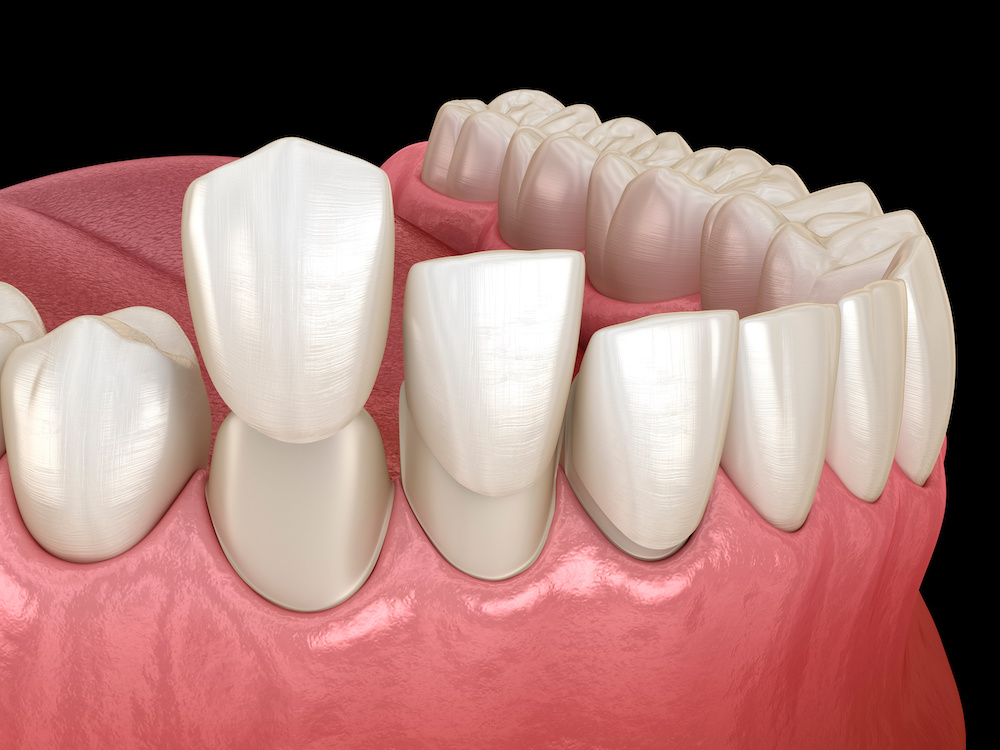
A Bridge is literally like a bridge across a river. It uses two poles (the teeth either side of the gap) and then a false tooth hangs in between the two poles, much like a bridge hangs between the two poles either side of a river. The Bridge looks and feels the same as natural teeth and functionally is as good as natural teeth. Before the age of Dental Implants, a Bridge was the only option to fill a gap permanently.
A Dental Implant is a titanium pin that is surgically placed into the bone. The body then bonds to the implant, so the implant becomes like a new root. A new, artificially created tooth is then attached to the implant with a screw. Dental Implants look and feel like natural teeth. They are a little more solid than a bridge, and do not require any work to the teeth on either side of the gap.
Both methods are very good, highly successful treatment options, when carried out by a well trained and experienced dentist. There are advantages and disadvantages for either treatment modality, which should be fully discussed and understood by the patient prior to making a decision.
In days gone by, 20 plus years ago, bridges were the only option to replace missing teeth, they have the advantage of being able to be carried out over 2-3 appointments, and if teeth either side of the gap are heavily broken down or filled then these teeth are stabilised as well by using a bridge. The trouble sometimes with bridges is that when the teeth either side of the gap are not heavily filled or broken down you are over treating these teeth, and potentially doing them harm in the future, and starting a cycle that requires more treatment in the future. The other issue with bridges is that all the units are connected so if something goes wrong with one of the units then everything needs to be replaced.
The advantage that implants have over bridges is that generally all the teeth remain separated, so therefore reducing future costs, plus you have no need to treat the teeth either side of the gap until it is necessary and often by less expensive or complicated treatment modalities. Unfortunately implants do take longer and there is a surgical phase involved and a healing period of 3-6 months in most cases. The surgery with modern techniques is now very straight forward and discomfort levels are quite minimal post surgery, most of my patients feel comfortable to return to work the next day.
Not every patient is suitable for implants though, if for example you have on going gum disease, this needs to be controlled prior to implants. Also immune compromised patients e.g. diabetics, smokers and patients on bisphosphonate medication need special care.
Population groups are keeping there teeth for longer, but this also means they have been more heavily restored and eventually even with the best efforts of dentists the teeth just become structurally too weak and some fracture in a way that can’t be restored, and this can happen under bridges and crowns. Even when bridging a gap, it is important not to bridge a gap that is more than two teeth, it is guaranteed to fail eventually, then what are you going to do, place an implant or two and make an implant retained bridge (instead of teeth you use implants as the poles). My point being that all options should be explored because often spending a little more at the beginning on treatment with best long term prognosis will save you money in the long run.
Dental Implants are a better option than a Bridge if:
- The gap is more than two teeth. If the gap is any wider than two teeth then there will be too much force put on the support poles if a bridge is used, causing damage to the support teeth;
- If the gap does not have teeth either side to use as poles or support teeth for a bridge;
- If the teeth either side of the gap have not been treated or minimally treated in the past. Teeth are there strongest long term if left untreated; or
- If there are potentially any future issues that may arise from the other teeth. Bridges are a connected unit between three or four teeth, so if something goes wrong with one, everything then needs to be replaced. It is always a lot simpler and cheaper in the future if you are only dealing with one tooth instead of multiple teeth.
The benefits of a Bridge are:
- Treatment can usually be finalised within 2-3 appointments;
- There is no surgery required;
- If the teeth either side of the gap are heavily filled then crowning these teeth can actually improve the long term prognosis for them. Thus, multiple issues are solved at once; and
- If the teeth have been lost for a long period of time, then there will have been some bone and tissue loss. Bridges can solve these issues much more easily than Dental Implants, without the need for bone or tissue grafting procedures.
Not all dentists will explore all treatment options with the patient. If a dentist does not feel comfortable or experienced in either Bridges or Dental Implants, then there will be a natural bias in treatment recommendations towards the treatment option which the dentist is most comfortable carrying out. Most dentists will do Bridges, but not all dentists will discuss the option of Implants with a patient.
Conversely, a dentist who places Implants will discuss all the negatives about bridges and only really recommend Implants. It is important to find a dentist who gives the patient all options, explaining them thoroughly without any bias. Ultimately, it is the patient who needs to be able to make the decision.
